Abstracts
Photo Gallery
From right to left: Prof. Mohsen El-Hazmi, Dr. Erol Baysal, Prof. Taher Sharkawy, Dr. Ahmed Marzouqi, and Dr. Ayman Saleh.
The Workshop on Genetic Disorders in the Arab World
Posters exhibition of the Workshop on Genetic Disorders in the Arab World
|
Contact Us
|
Mailing Address:
Centre for Arab Genomic Studies
P.O. Box 22252, Dubai
United Arab Emirates
Telephone: +971-4-398 6 777
Fax: +971-4-398 0 999
E-mail: cags@emirates.net.ae
|
|

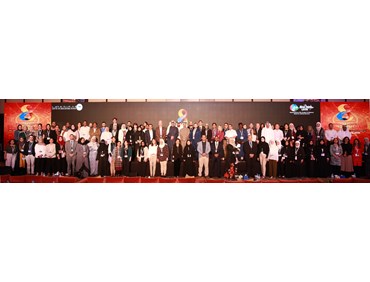
The Executive members of the Centre for Arab Genomic Studies (a division of Sheikh Hamdan Bin Rashid Al Maktoum Award for Medical Sciences) organized a workshop on Genetic Disorders in the Arab World as a prelude to the First International Genetic Congress from December 9 –11, 2003 at Shangri-La Hotel, Dubai, UAE.
The genetic diseases are the leading cause of death among newborn babies. The higher number of consanguineous marriages and marriages between close cousins in the Arab region, is the main cause of genetic disorders. The first step is to find the cause of these diseases and identify the genes responsible for the disease. The Second step is to find cures for these disorders and map the demographic prevalence of genetic disorders. The CAGS was set up to cater to the genetic research needs of all Arab countries and it would be run by the best scientists and technicians.
Prof. Najib Al Khaja, President of the Centre for Arab Genomic Studies and the Secretary General of the Sheikh Hamdan Bin Rashid Al Maktoum Award for Medical Sciences inaugurated the workshop. More than 60 –80 geneticists and physicians have attended the workshop. There were 7 presentations by various International experts and also from the Arab world.
The workshop concluded by deciding to have a comprehensive database of genetic disorders in the Arab world.
After the workshop the team of experts visited the Centre for Arab Genomic Studies.
Overview of CAGS
Dr Mahmoud Taleb Al Ali
Director - Centre for Arab Genomic Studies Dubai, U.A.E.
Genetic research has contributed in diagnosing and predicting disease and disease susceptibility, disease intervention, effective pharmaceuticals, genetic testing, therapy, and understanding life. Careful consideration of the many ethical, legal and social issues raised by this research is crucial to the successful translation of research results into clinical practice.
Due to the importance of genetic disorders in the region and the necessity to alleviate the substantial suffering of those with genetic disorders H.H Sheikh Hamdan Bin Rashid Al Maktoum Deputy Ruler of Dubai, Minister of Finance and Industry and patron of the Awards decreed the establishment of the Centre for Arab Genomic Studies (CAGS).
The Mission of this centre is to characterize, prevent, and alleviate human genetic disorders in the Arab countries based on the recent advances in human genetics and the information available from the Human Genome Project.
CAGS will be the forum to foster and support collaborative research aiming at identifying, elucidating the genetic basis of diseases, limiting the spread of these diseases and to bring under one umbrella diverse expertise in the field of human genetics and related fields from all over the Arab world as well as supporting preventive approaches.
The Centre was inaugurated on 25th June 2003 by H.E Hamad Abdul Rahman Al Midfaa, Minister of Health, Chairman Board of Trustees, Sheikh Hamdan Bin Rashid Al Maktoum Award for Medical Sciences at the Genetic Centre of Al Wasl Hospital Dubai, U.A.E. A local committee of scientists has been established to create an initial genetic diseases database and to prepare a two level scientific study whose first objective is the creation of local database identifying locally prevalent genetic diseases and then incorporating data on genetic diseases from other Arab countries. Based on the these studies, CAGS will eventually set up a regional center for genetics diseases and research.
Top
Emerging Role of Chemoprevention in Cancer Management
Hasan Mukhtar, Ph.D.
Helfaer Professor of Cancer; Research Director and Vice Chair for Research Department of Dermatology, Medical Science Center, University of Wisconsin, Madison 53711, U.S.A.
One way to reduce the occurrence of cancer is through chemoprevention which is the means of cancer control through which its occurrence as a consequence of exposure to carcinogenic agents can be slowed, blocked or reversed by the administration of one or more naturally occurring or synthetic agent. For a variety of reasons naturally occurring agents present in the diet and beverages humans normally consume are desired chemopreventive substances. One excitement about chemoprevention is that it can be targeted at one or more stages of multistage carcinogenesis process of initiation, promotion and progression. The other excitement is that many such agents are showing remarkable effects in cell culture and many animal tumor model systems and over thirty classes of such agents are known. Despite of these, the experience of translating in vitro cell culture and in vivo animal data to human population has not met with great success. Why is this disparity? Part of this reason is that people eat food and not nutrients or dietary constituents. The other reason is that we have not been successful in defining a human population where we can recapitulate established animal protocols. Finally our knowledge base of any agent that could be effective for a defined cancer site in a specific population is primitive. It has become clear that the use of a single agent approach for each cancer site in diversified populations is not valid. In recent years studies are being conducted to unravel the effect of chemopreventive agents on genes and their encoded proteins. This emerging knowledge base could be essential for identifying individuals who will and will not benefit form chemopreventive strategies. With the use of molecular and cellular approaches and sophisticated technology of proteomics and genomics, it will be possible to custom design individualized chemoprevention cocktails for diversified populations, especially for those who are at high risk for cancer development.
Top
Patterns of Inherited Diseases among Arabs
Ahmad Said Teebi, MD, FRCP(Edin), DABMG
Head Section of Clinical Genetics & Dysmorphology, Division of Clinical and Metabolic Genetics, The Hospital for Sick Children and University of Toronto, Toronto, Canada
Prof. of Pediatrics & Medical Genetics, University of Toronto, Canada
The Arabs in general are genetically diverse. Several migration waves and wars across history have contributed to their diversity. These include Semitic tribes migrations from the Arabian Peninsula to The Valley of Tigris & Euphrates in 3500 BC and to the East Mediterranean region in 2500 BC, the Islamic expansion in the 7th century AD, the crusade wars and the recent migration dynamics. These events had resulted in the admixture of the original Arabs with other populations extending from east and south Asia to Europe and Africa. The demographic features of Arabs nowadays include high rates of consanguinity; which is a tradition, large family size with an average of four children per family, and a rapid population growth. As a consequence of their inbreeding and due to other factors, there is a high frequency of autosomal recessive disorders together with increased frequencies of homozygosity of autosomal dominant traits such as familial hypercholesterolemia and X-linked traits such as G6PD deficiency as well as an apparent increase in the rates of multifactorial disorders. Chromosomal disorders are of comparable rates and patterns to those seen elsewhere.
Autosomal recessive entities that are prevalent among Arabs include:
- Hemoglobinopathies with variation in the incidence of specific types as seen in the frequencies of ?-Thalassemia and sickle cell traits. Occurrence of rare traits (such as Hb-O) also exists in Arabs.
- Neuromuscular disorders including Werdnig-Hoffman syndrome (all over), severe childhood autosomal recessive muscular dystrophy (Sudan/Tunisia), other neuromuscular disorders (all over), and autosomal recessive ataxias (North Africa).
- Familial Mediterranean Fever (Jordan and Palestine) with an incidence similar to that in the Sephardic Jews and Armenians of 1:1500.
- Metabolic disorders including homocystinuria and organic acidurias (Arabian Peninsula) and congenital chloride diarrhea (Arabian Peninsula). Phenylketonuria have an incidence probably similar to those in Europe and North America but with different patterns of mutations that are also different within Arab countries, with many rare and unique mutations. Atypical form is relatively common in Saudi Arabia.
- Newly recognized autosomal recessive syndromes and variants. More than 250 disorders have been described among Arabs until now.
It is not unusual to encounter more than one autosomal recessive disorder within the same family probably as a direct consequence of inbreeding.
Cystic fibrosis originally thought to be extremely rare was often found in atypical presentations and mild forms. The incidence is close to that of Europe. ?F508 incidence ranges between 0-40% in various Arab communities. Many unusual or new mutations were detected.
Other relatively common disorders include xeroderma pigmentosa (Egypt/Tunisia), osteopetrosis syndromes including osteopetrosis with carbonic anhydrase II deficiency (Arabian Peninsula/Tunis), Wilson disease and nesidioblastosis of the pancreas (Arabian Peninsula). Common malformation syndromes include Bardet-Biedl, and Meckel syndromes (Among the Bedouin in Palestine and the Arabian Peninsula). There are several examples of disorders limited to certain isolates or large kindred’s such as cystic fibrosis in a Qatari tribe, newly recognized type of Ehlers-Danlos syndrome with tortuous blood vessels in a large Bedouin tribe from Saudi Arabia and Qatar, neurogenic arthrogryposis congenita in large Palestinian kindred, Bardet-Biedl syndrome in some Bedouin tribes, cerebrotendinous xanthomatosis in the Druze community, and metachromatic and Krabbe’s leucodystrophies in some Palestinian villages. Nonsyndromic sensori-neural deafness with Connexin 26 mutations is frequently diagnosed in Palestine, Arabian Peninsula and Tunisia. More work is required to further characterize the prevailing genetic disorders in each geographic location together with their mutations in order to plan for appropriate screening and testing. The development of Arab Genetic Disease Database (AGDDB) is in progress. This would be a prototype of population specific databases.
Top
Genetic Disorders & Prenatal Diagnosis - Dubai Experience
Dr. Mohammed Naveed, MBBS, DCH, DNB, DM. PhD
Pediatrician & Clinical Geneticist, Genetics Department, Genetic & Thalassemia Center, Al-Wasl Hospital, Department of Health & Medical Services, Dubai, UAE
The epidemiological data available from the Eastern Mediterranean Region indicate that genetic disorders and congenital abnormalities are responsible for a considerable proportion of perinatal and neonatal morality in many countries in the region including United Arab Emirates (UAE).
Our Cytogenetics laboratory based in Department of Health and Medical services, Dubai, receives samples from all over the country for Cytogenetics investigations. Between January 1987 & December 2002, chromosomal analysis was done on 14,546 cases of peripheral blood and 459 of amniotic fluid. In numeric abnormalities, trisomy 21 was the most common (579 in peripheral blood, 4 in amniotic fluid) abnormalities and followed by trisomy 18 (55 in peripheral blood; 2 in amniotic fluid) and trisomy 13 (21 in peripheral blood) among autosomes. Among sex chromosome, 45,X was the most common (39 in peripheral blood), followed by XXY (13 cases in peripheral blood; 1 in amniotic fluid), XXX (5 in peripheral blood), XYY (1 in amniotic fluid), XXXX (1 in peripheral blood), XXXXY (1 in peripheral blood) and 92,XY (1 in amniotic fluid). In structural abnormalities, 124 translocation in peripheral blood and 3 in amniotic fluid was observed. Reciprocal translocation and Robertsonian translocation are two most common abnormalities. Other structural abnormalities seen include 16 deletions, 3 duplications and one ring chromosome.
We have also analyzed all samples from suspected patients with metabolic disorders referred from various hospitals in United Arab Emirates. Over a period of five years, a total of 275 samples were analyzed with Gas Chromatography/Mass Spectrometry (GCMS) technique for the detection of organic acid disorders. We have diagnosed 20 patients with various types of organic aciduria including methylmalonic academia (4 cases), propionic acidemia (2 cases), 3-OH-3-methyl glutaric aciduria (3 cases), ethylmalonic aciduria, glutaric aciduria type I, L-2-OH glutaric aciduria (2 cases), ketothiolade deficiency (2 cases), pyroglutamic aciduria, hyperglyceroluria (2 cases), biotinidase deficiency and maple syrup urine disease. With spectrofluorophotometric analysis, we have diagnosed GM1 gangliosidosis (5 cases), fucosidosis, manosidosis, Morteaux-Lamy syndrome, Gaucher’s disease (2 cases), Tay-Sach’s disease (4 cases), Sandhoff disease (4 cases), Pompe’s disease (3 cases) & Krabbe’s disease (2 cases).
At Dubai Thalassemia Center over 750 patients with Thalassemia and Hemoglobinopathies are registered. Of these 512 patients are on regular blood transfusion program. The carrier frequency among Dubai Locals for Beta-Thalassemia is 8.5% and for Alpha-Thalassemia is 49%. At the Genetic Clinic of Al-Wasl hospital a wide spectrum of other genetic disorders have also been observed.
Since 1998, we have also observed a growing need for prenatal diagnosis of various Genetic disorders including Thalassemia. Prenatal diagnosis of Thalassemia is very well accepted in the local community due to the religious backing of termination of affected pregnancies before three months of pregnancies. On an average about 70 UAE national families are seeking this service every year and is supported by the local government policies.
In conclusion, our observations suggest that a variety of genetic are common in the local population. There is also a growing demand for prenatal diagnosis of these conditions in the region.
Top
Al – Jawhara Center for Molecular Medicine, Genetics and Inherited Disorders, College Medicine and Medical Sciences – Arabian Gulf University Bahrain: A Noble Mission
Mioz Bakhiet, MD, PhD
Professor and Senior Consultant Neuroimmunologist
Director of HH Princess Al Jawhara Centre for Molecular Medicine, Genetic and Inherited Disorders, Arabian Gulf University, Kingdom of Bahrain
There has been an enormous growth in our understanding of how basic biological processes take place at a molecular level in recent years. Molecular Medicine is a highly specialized part of Medicine that explains the fundamental principles vital to an understanding of molecules that are keys to the normal functioning of the body and those related to the fundamental mechanisms of diseases. It also deals with the manipulation of these molecules to improve diagnosis, treatment, and prevention of disease. Human genome gene regulation and expression in health and disease and genetic engineering are important parts of Molecular Medicine. Within these categories emerge the clinical and molecular genetics of inherited disorders as a major part. Thus, at Al Jawhara Center for Molecular Medicine, Genetics and Inherited Disorders was established at the College of Medicine and Medical Sciences -Arabian Gulf University in Bahrain to function within these objectives.
The specific aims of the center are to provide diagnostics services for heritable syndromes and disorders including chromosome, DNA, and biochemical analysis and to provide clinical genetics services and specialty clinics for evaluation, diagnosis, counseling and education for the adult and pediatric population including prenatal genetics services in pregnancy as pre-conception counseling, risk assessment, teratogen information, and prenatal diagnosis. Other important goals are to identify and describe the patterns of birth defects and to assess the impact of congenital malforn1ations upon infants, families, and to collaborate with others to determine factors involved in their etiologies in order to develop insights into primary prevention and further more to provide Research and Educational facilities in Molecular Medicine, Clinical Genetics and Gene Therapy.
To achieve these goals, a working plan was established and executed after generous donation from HH Princess AI-Jawhara Al Ebrahim the wife of HH the Custodian of the Two Holly Mosques. Disciplines and Center Units were defined, which include (A) Diagnostics services that are composed of Molecular Diagnostic Unit, cytogenetics Unit and Metabolic and Biochemical Unit (B) Clinical genetics that is formed of a community genetics Unit and Hereditary anemias Unit (C) Research and Education.
For each unit, available services, future services, present personnel, personnel to be recruited, equipment to be ordered and Research directions are herein presented.
Top
A Comprehensive Model of Community Genetic Services Incorporating Prevention, Control and Care of Genetic Diseases
Prof. Dr. Mohsen. A. F.EL-Hazmi
Chairman and Professor of Medical Biochemistry and Human Genetics; Medical Director and Consultant, University Hospital, Kingdom of Saudi Arabia
Director of W.H.O Collaborating centre College Of Medicine, King Saud University Riyadh, Kingdom of Saudi Arabia
Over the last few decades, genetic diseases have surfaced as a major cause of morbidity and mortality in majority of the developing countries. Due to the chronic nature of these diseases and lack of definitive treatment, many prevention, control and care strategies have been proposed and applied in different countries. Basically these strategies utilize Community Genetic Services which cover a wide range of multifaceted genetic- related requirements of the individuals, the families and the community.
In Saudi Arabia, based on our experience of Community Genetic Services for over twenty years, we have developed a penta-axial SETRR model appropriate to the traditions, customs and religious believes prevalent in the population. This model for prevention, control and care of genetic diseases incorporates: Services, Education, Teaching, Registry and Research, is entertained as follows:
- Provision of services that must reach the entire population in a country in order to provide equitable health services to all citizens. This involves establishment of genetic clinics and genetic centres, well-trained and knowledgeable family doctors, nurses and social workers and consultants.
- Education for the health care personnel, including the family doctors as partners in these services.
- Teaching to improve knowledge of the medical and non-medical personnel, patients, their families and the general public at large.
- Preparation of the Registry of genetic diseases in the population.
- Research to identify the molecular pathogenesis of the genetic diseases, establish more definitive methods for the identification and diagnosis of the genetic defect, establish appropriate management strategies and identify ways and means of prevention and control. This programme incorporates field research, laboratory investigations and clinical trials for management of commonly encountered genetic disorders in Saudi population.
With the model in view, Community Genetic Services programme in Saudi Arabia were initiated during the early 1980s. The programme was exemplified by blood genetic disorders, where these disorders occur at a high frequency in several regions of Saudi Arabia. The programme incorporated a National Working Group and W.H.O collaborating centre.
More recently, other genetic diseases were included and additional bodies i.e. the co-ordinating National Committee was conceived at the Ministry of Health, Riyadh. Consequently, several Programmes were adopted to improve genetic services through:
- Establishment of specialized centers and genetic clinics for care and management of patients.
- Provision of learning and training opportunities for health personnels by way of courses, workshops and conferences.
- Adoption of the health care personnel, scientists, patients, parents and the general public about genetic disorders by holding doctor-doctor, doctor-patient and patient- patient meeting.
This is a continuous process and new ideas and inputs from different related disciplines have been incorporated in order to achieve the ultimate goal of prevention and control.
In this presentation, the Saudi “model” will be outlined and discussed as an applicable model to the Gulf Region.
Top
The Campaign to Control Genetic Blood Diseases in Bahrain
Dr Shaikha Al Arrayed, MBCh B, DHCG, PhD.
Consultant Clinical Geneticist & Head of Genetic Department, Salmaniya Medical Complex, Kingdom of Bahrain
Genetic blood diseases are frequent in Bahrain as in all Middle Eastern countries. Previous neonatal screening study done in 1984-1985 showed that the incidence of sickle cell disease (SCD) was 2.1%, of sickle cell trait (SCT) 11%, alpha-thalassaemia trait 20%, and G6PD 25%, while the carrier rate for beta Thalassaemia was 3%; this means that 210 babies with SCD ,were expected to be born annually.
During the seventies, patients attending health services were treated symptomatically. Thalassaemia patients were under-treated and under-transfused. Many of them developed complications and dysmorphic features. Many families had 3-5 children with thalassaemia or sickle cell disease, and patients with sickle cell disease were treated as malingerer and subjected to neglect in emergency rooms and hospitals. They were often viewed as drug users since they often come for analgesics.
At the beginning of the eighties, the service improved for these patients. The ministry of health began organizing services provided to them through health centers, medical clinic and pediatric clinic. In 1984, the first genetic clinic was established at the Salmanyia medical Complex and premarital counseling began for families at risk, Information booklets were prepared and distributed widely and educational campaigns started in school and clubs in a attempt to increase awareness about these diseases among students and the public. In 1991, Bahrain Hereditary Anemia Society was formed with the aim of fighting these diseases and raising the standard of care for these patients. In 1992, the Minister of Health formed a national committee for prevention of genetic disease in Bahrain, which elaborated a plan-aimed at preventing and eliminating these diseases. The plan advised concentrating on screening and education.
Screening all pregnant women, followed by the newborn testing if the mother was found to be a carrier . In 1993, premarital counseling service was organized by the genetic department and maternal and child health care physicians, a form was designed to standardize the service through all health centers, and although initial acceptance levels were poor momentum has gradually increased.
In 1998, a student-screening project began. The aim of screening all students before leaving school was to raise the awareness among youth about hereditary anemia, and to advise them to take the right decision in order to prevent these diseases in their future families. A card with blood results was given to each student along with an information booklet about the disease he/she carries. This project is now entering its sixth year and has made a tremendous impact on awareness, among students and families. And it resulted in an increase in premarital counseling attendance.
In 2001, the Shura Council agreed to make PMC mandatory before marriage, although the couple has freedom of choice. The Ministers’ Cabinet also agreed on a PMC law, which will be implemented within one year.
Recently, a newborn screening study was done to determine the effects of this long Campaign (16-18 years). 2000 Bahraini newborns were tested, 18 newborns were found to have sickle cell disease. The new figure for SCD incidence in Bahrain is 0.9% this indicates a 60% decline in incidence rate.
With the continuation of education, awareness campaigns, screening of carriers and premarital counseling, we expect the number of affected children born to be reduced tremendously over the next few years.
Thus, for the first time, Bahrain has recorded a less than one per cent birth rate of babies suffering from sickle cell disease and, if this trend continues, Bahrain will soon become the first country in the Gulf region to completely eliminate the disease.
Top
|